More Than Nostalgia: Why Preserving Memories Is Really About Preserving Us
By Tom Reid • May 15, 2026
I've worked at FOREVER® for ten years. In that time, I've helped build tools to digitize photos, organize albums, and keep family memories safe. It's meaningful work, and I believe in it deeply. But lately I've been thinking about why it matters, not just practically, but at a level that goes much deeper than most of us talk about.
Because here's the thing: memory preservation isn't really about the photos.
We live in an age of infinite information. Every day, we're flooded with news, notifications, updates, images, opinions. It's an endless stream of right now. We've never had more access to what's happening in the world at any given moment.
And yet, something feels off. Despite all this information, many of us feel strangely disconnected. From each other. From our own histories. From the thread of meaning that's supposed to run through a life.
I've come to believe this is because we're drowning in context while starving for continuity.
Context is what's happening right now. It's the immediate, the urgent, the new. Continuity is the thread that connects yesterday to today to tomorrow. It's how we know who we are across time. It's the story that holds the moments together.
Without continuity, we're just reacting. We see clearly but we can't remember ourselves.
Think about what happens in a family when the stories stop being told.
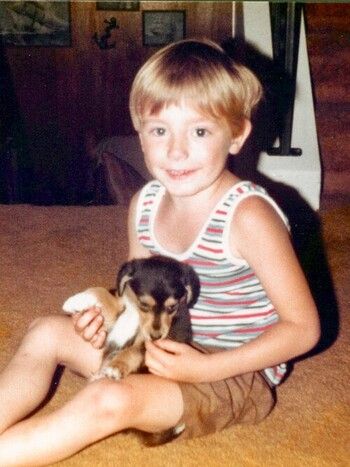
The photos pile up. There are thousands of them now on phones, in cloud accounts, and scattered across platforms. We're capturing more moments than any generation in history. But capturing isn't the same as keeping. And keeping isn't the same as knowing.
Your grandmother's photo from 1962 isn't just an image. It's a portal. But only if someone can tell you that she was twenty-three in that picture, that she'd just moved to a new city alone, that the dress she's wearing was one she sewed herself because she couldn't afford to buy one. Without that story, it's just a woman you don't recognize in a dress that doesn't mean anything.
The photo is context. The story is continuity.
When we lose the stories, we don't just lose information. We lose the thread that tells the next generation who they come from, what their people survived, what mattered enough to remember. We lose the thing that makes a family a family rather than a collection of people who share DNA.
I think about this at a bigger scale too. A society that can't maintain its shared stories starts to lose its sense of self. It becomes overwhelmed by the firehose of the present and can't hold onto the threads of its past. Not because it can't see, but because it can no longer remember itself.
That's not a technology problem. It's a human problem. But technology can be part of the solution if it's built with the right intention.
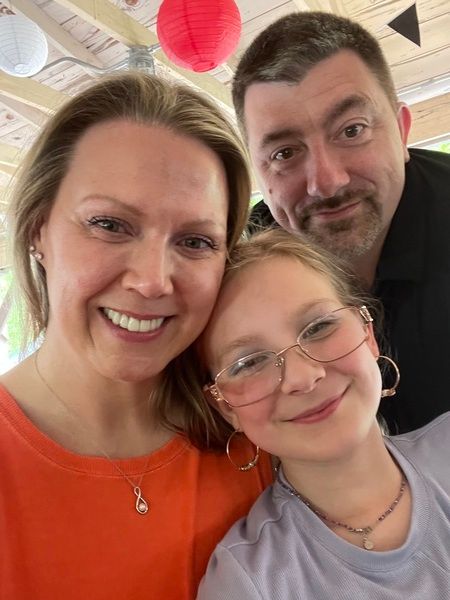
Most platforms are designed to keep you scrolling, consuming, and reacting. They're built for context: the newest post, the latest outrage, the next notification. They're optimized for your attention, not your memory.
What if we built something different? What if the technology was designed not to capture your attention, but to protect your continuity? Not to keep you scrolling, but to help you remember yourself, your people, and your story.
That's what I believe FOREVER® is really about.
When someone sends us a box of old VHS tapes to digitize, they're not just converting a format. They're rescuing continuity. Those tapes hold birthday parties where grandpa is still alive, vacations to places that don't exist anymore, ordinary Tuesdays that turned out to be the last ordinary Tuesday before everything changed.
When someone organizes their photos into albums and writes captions, they're not just tidying up a hard drive. They're doing the quiet, essential work of turning moments into meaning. They're building the bridge between "this happened" and "this is who we are."
When someone shares a memory with their family through FOREVER, they're not posting for likes. They're weaving continuity by connecting one generation's experience to the next and making sure the thread doesn't break.
This is deeper than nostalgia. Nostalgia is a feeling. This is infrastructure. It's the scaffolding that holds identity together across time.
I've spent a decade building tools for this, and I've come to see it with fresh eyes. Family memory preservation isn't a “nice-to-have". It's not a sentimental luxury. It's one of the most fundamental things humans do. We tell stories, we keep records, and we pass down what we've learned, so the next generation doesn't have to start from scratch.
In a world that's moving faster than ever and becoming more fragmented than ever, this work matters more than it ever has. Every day, we're flooded with more context while our continuity is quietly being eroded.
Every photo you preserve is a vote for continuity over chaos. Every story you tell is a thread in the fabric that holds your family together. Every memory you protect is a piece of consciousness that persists instead of disappearing into the noise.
That's not nostalgia. That's the most important work there is.
And I'm grateful, after ten years, to still be part of it.